


CLIA-certified, CAP-accredited
Analyzed in a high-complexity andrology laboratory
WHO 6th Edition (2021) methodology
Most recent WHO semen analysis standard
Active Cooling transport
Validated sample transport, preserved until analysis
Results in 24 hours
With MateIQ interpretation included
Is this the right test for me?
This standalone test is intended for men who have already completed a semen analysis, typically with core parameters within reference ranges, but still have a specific reason to evaluate DNA fragmentation. It is also designed for men repeating a previous DFI test. Four situations fit:
Recurrent Pregnancy Loss
For couples with recurrent pregnancy loss, the AUA/ASRM male infertility guideline recommends evaluating the male partner with sperm DNA fragmentation. ASRM’s 2026 recurrent pregnancy loss guidance adds that DFI testing may be considered in otherwise unexplained recurrent miscarriage or recurrent miscarriage with concomitant infertility.
Your physician specifically requested DFI.
Your physician, reproductive urologist, or fertility clinic has specifically recommended a sperm DNA fragmentation test.
Unexplained Infertility
Up to 20% of men with unexplained infertility and normal core semen parameters may have elevated DNA fragmentation (Esteves et al., Andrologia, 2021).
Repeat DFI testing
You previously had elevated DFI and want to retest after physician-directed treatment, lifestyle changes, or time. Sperm development takes roughly three months, so physicians often recommend retesting on that timeline.
Sperm can appear normal and
still carry DNA damage.
Mate Health’s Comprehensive Semen Analysis evaluates sperm concentration, motility, morphology, and additional parameters. These measures describe sperm quantity, quality, and movement. DNA fragmentation testing evaluates the integrity of the genetic material sperm carry, a dimension of sperm quality that the Comprehensive Semen Analysis does not assess. DNA fragmentation testing and vitality assessment are included in Mate Health’s Advanced Semen Analysis.
Clinically Validated At-Home Sperm DNA Fragmentation Testing
Mate Health’s at-home DNA fragmentation testing is supported by eight validation studies, including a comparison of fresh and preserved, cooled specimens held under simulated transport conditions for up to 36 hours.
Agreement with fresh specimens at the study’s DFI cutoff. Both results exceeded the 90% acceptance threshold.
Review Our At-Home DNA Fragmentation Validation StudiesWhat is it?
Sperm carry the paternal genetic contribution to fertilization. DNA fragmentation refers to breaks or damage within the DNA strands contained in sperm cells. The DNA Fragmentation Index, or DFI, measures the proportion of sperm in a sample with detectable DNA strand damage. A higher DFI indicates a greater proportion of sperm with altered DNA integrity.
MEN WITH UNEXPLAINED INFERTILITY AND
NORMAL ROUTINE SEMEN PARAMETERS
Up to 20% of men with unexplained infertility and normal routine semen parameters may have elevated DNA fragmentation. Standard parameters alone may not identify this finding.
Why does it matter clinically?
Research has associated elevated DNA fragmentation with conception difficulties, early pregnancy loss, and lower success rates in certain assisted reproductive settings. DNA fragmentation testing does not diagnose infertility by itself, but it may provide additional context for couples and physicians when evaluating unexplained infertility, recurrent pregnancy loss, or assisted reproduction planning.
How Mate Health approaches it.
Mate Health's Advanced semen analysis includes DNA fragmentation testing and vitality assessment. DNA fragmentation is measured using Sperm Chromatin Dispersion, or SCD, an established laboratory method for assessing DNA strand integrity in sperm. Results are reported as a DNA Fragmentation Index with interpretive context for physician review, helping explain what the finding may mean for fertility evaluation.
Better next steps.
A Comprehensive semen analysis result that falls within normal reference ranges does not rule out elevated DNA fragmentation. For couples navigating unexplained fertility challenges or recurrent pregnancy loss, DNA fragmentation testing may provide an additional data point worth discussing with a physician.
Order. Collect. Ship. Understand.

Order your kit
Your at-home semen analysis kit ships in discreet packaging, no appointment or clinic visit required.
Collect from home
Follow the simple instructions and collect in your own space, on your own schedule.
Ship your sample
Drop off your pre-labeled kit at FedEx. Your sample ships Priority Overnight to our CLIA-certified, CAP-accredited lab, while Active Cooling helps maintain it below 15°C for up to 36 hours in transit.
Results + MateIQ
Results are delivered in 24 hours through your secure portal, with MateIQ to help explain your report and help you prepare questions for your physician.
Your Guide to Using Our
At-Home Fertility Test Kit
▶ Watch Instruction Video
Choose the level of insight you need

At-Home Comprehensive Semen Analysis
The starting point for male fertility evaluation.
Best for couples beginning the fertility journey, or if your partner has already started testing. More semen parameters than your typical semen analysis.
- 20 clinical semen parameters
- FedEx Priority Overnight shipping included
- Validated specimen transport (Active Cooling)
- Simplified patient report & physician lab report
- MateIQ - AI-powered report interpretation
- Results in 24 hours
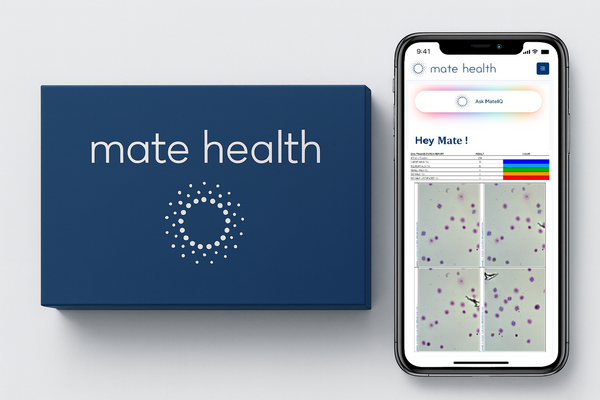
At-Home Advanced Semen Analysis
For couples who want additional sperm quality testing.
Best for couples who have been trying without clear answers, are exploring IUI or IVF, or want the most complete semen analysis option.
- DNA Fragmentation Index – genetic integrity
- Vitality testing – % of live vs. non-viable sperm
- Sperm microscopy images for physician review

At-Home DNA Fragmentation Test
For those who have already completed a semen analysis.
Best for recurrent pregnancy loss, unexplained infertility after a normal result, or physician-requested DFI testing.
- DNA Fragmentation Index – % of sperm with fragmented DNA
- Sperm Chromatin Dispersion (SCD) method
- Sperm microscopy images and videos for physician review
Haven't had a semen analysis? Choose Comprehensive or Advanced first.

Frequently Asked Questions
Find answers to common questions about our products, services, and policies.
Shipping Information
Do I need a semen analysis before ordering this test?
Yes, you should already have completed one. This test reports DNA Fragmentation Index only. It does not measure sperm count, motility, morphology, or other core semen parameters, and medical guidelines place semen analysis at the start of the male fertility evaluation. If you have not had a semen analysis, start with Comprehensive, or choose Advanced, which includes core semen parameters and DFI in one test.
What is the difference between this test and Advanced Semen Analysis?
Advanced reports 22 parameters: 20 clinical semen parameters plus DNA Fragmentation Index and vitality. This standalone test reports DFI only. It exists for men who have already completed a semen analysis and now have a specific reason to add DFI. If you need both, Advanced is the more complete and more economical option.
Can I have elevated DNA fragmentation with a normal semen analysis?
Yes. A man can have normal sperm concentration, motility, and morphology while still having elevated DNA fragmentation. Research has found elevated sperm DNA fragmentation in up to 20% of men with unexplained infertility despite otherwise normal core semen parameters. Read the research: Esteves et al., Andrologia, 2021.
What is a normal DFI?
DFI is reported as the percentage of sperm with fragmented DNA. Mate Health’s laboratory reports DFI against a reference range of below 30%, consistent with commonly cited thresholds for the SCD method. Interpretation thresholds vary across the medical literature, so your result should be considered in the context of your broader fertility evaluation. MateIQ helps explain your specific result and prepare questions to review with your physician.
Can DNA fragmentation be improved, and when should I retest?
Some factors associated with elevated sperm DNA fragmentation, including smoking, varicocele, febrile illness, and other sources of oxidative stress, may be modifiable or treatable. Because sperm development occurs over roughly three months, a physician may recommend addressing contributing factors and retesting after about three months. This standalone test is designed for repeat testing. Research is still needed to determine whether interventions that lower sperm DNA fragmentation improve pregnancy outcomes.